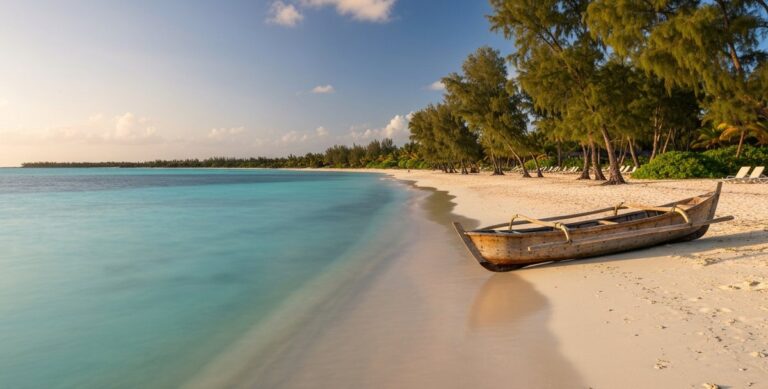
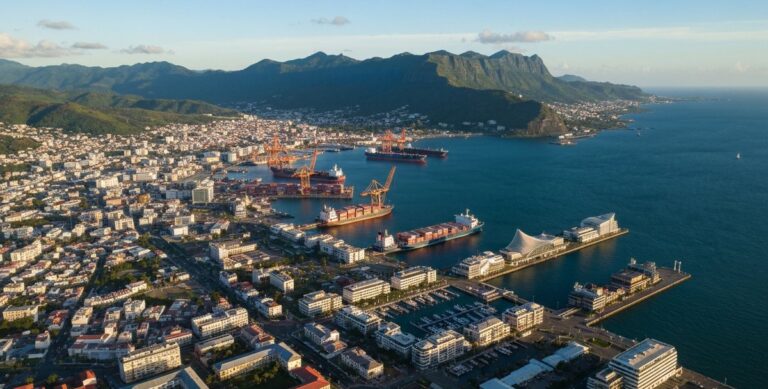
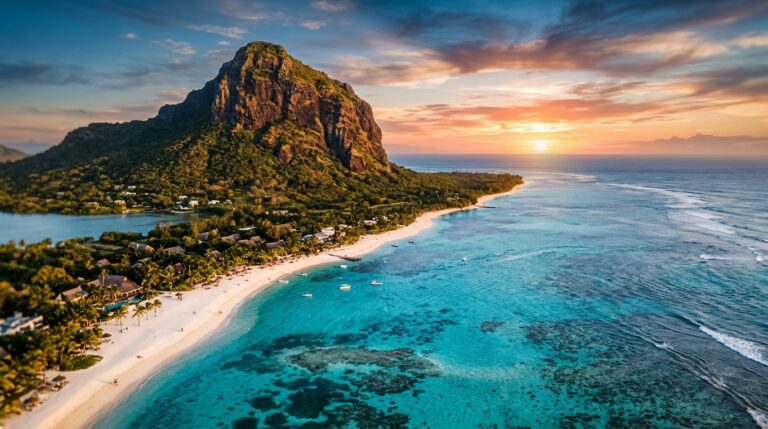
The Mauritius south coast stretches roughly 60 kilometres from the former sugar port of Mahébourg westward through Blue Bay, Souillac, and Le Morne — a sweep of reef-sheltered lagoons, dramatic basalt cliffs, and quiet fishing villages that contrasts sharply with the busier north. It rewards travellers who want beauty without the crowds, and it is best explored with your own transport or a private driver.
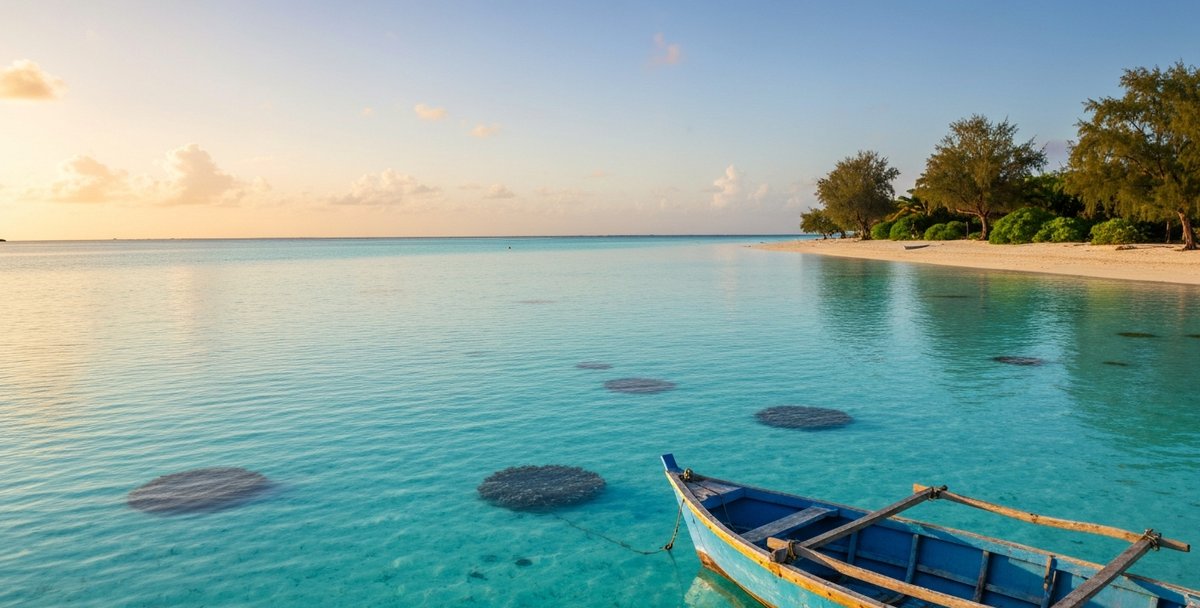
Table of Contents
- Why the South Coast Deserves More Than a Day
- Mahébourg — History, Market and the Waterfront
- Blue Bay Marine Park — Mauritius’s Best Snorkelling
- Pointe d’Esny and the Ile aux Aigrettes Ferry
- Souillac and the Coastal Clifftop Walk
- Le Morne Brabant — UNESCO Peninsula
- Getting to the South Coast from the Airport
- Getting Around the South Coast
- Where to Eat on the South Coast
- When to Visit
- Frequently Asked Questions
Why the South Coast Deserves More Than a Day
Most visitors who arrive at Sir Seewoosagur Ramgoolam International Airport (SSR) in Plaisance are within ten minutes of the south coast, yet many are transferred straight north to Grand Baie or east to Belle Mare without realising what lies just down the road. That is a genuine loss. The south coast holds the island’s premier marine park at Blue Bay, one of its most atmospheric historic towns in Mahébourg, the dramatic basalt shoreline near Souillac, and the iconic black basalt peninsula of Le Morne — all accessible on a single long day if you have a driver, or even better explored over two or three nights based in the region.
The landscape here is quieter and less commercialised than the north coast. Local guesthouses outnumber resort hotels in most villages. The pace is gentler. And the food — fish vindaye, octopus curry, dholl puri from roadside stalls — is arguably some of the most honest cooking on the island.
Mahébourg — History, Market and the Waterfront
Mahébourg sits at the southern tip of Grand Port Bay, about 7 kilometres south-east of the airport. It was the site of the 1810 Battle of Grand Port, the only French naval victory over the British during the Napoleonic Wars — an engagement that is still commemorated on the Arc de Triomphe in Paris. You can trace that story in the free National History Museum on Royal Road, a colonial-era mansion whose courtyard overlooks the waterfront.
What to do in Mahébourg
The Monday market on Rue de la Paix is the most compelling reason to time your arrival for the start of the week. Stalls spill across the pavement selling fresh turmeric, dried chillies, woven baskets, and second-hand saris. It is a working market rather than a tourist one, and prices reflect that — a bag of saffron costs a fraction of what you would pay in a hotel gift shop.
The waterfront promenade stretches south from the museum towards the lagoon, lined with old casuarina trees and small cafés. It is entirely flat and pleasant for a morning walk. Several boat operators along the quay offer half-day trips to Ile aux Aigrettes and the surrounding islets; prices tend to be in the Rs 800–1,500 range per person depending on the duration and whether snorkelling equipment is included.
Getting into Mahébourg Town
From the airport, Mahébourg is roughly a 15-minute drive and a transfer with mauritianrides.com costs significantly less than the flat-rate metered taxis waiting outside the arrivals hall — the difference matters if you are arriving as a group of three or four.
Blue Bay Marine Park — Mauritius’s Best Snorkelling
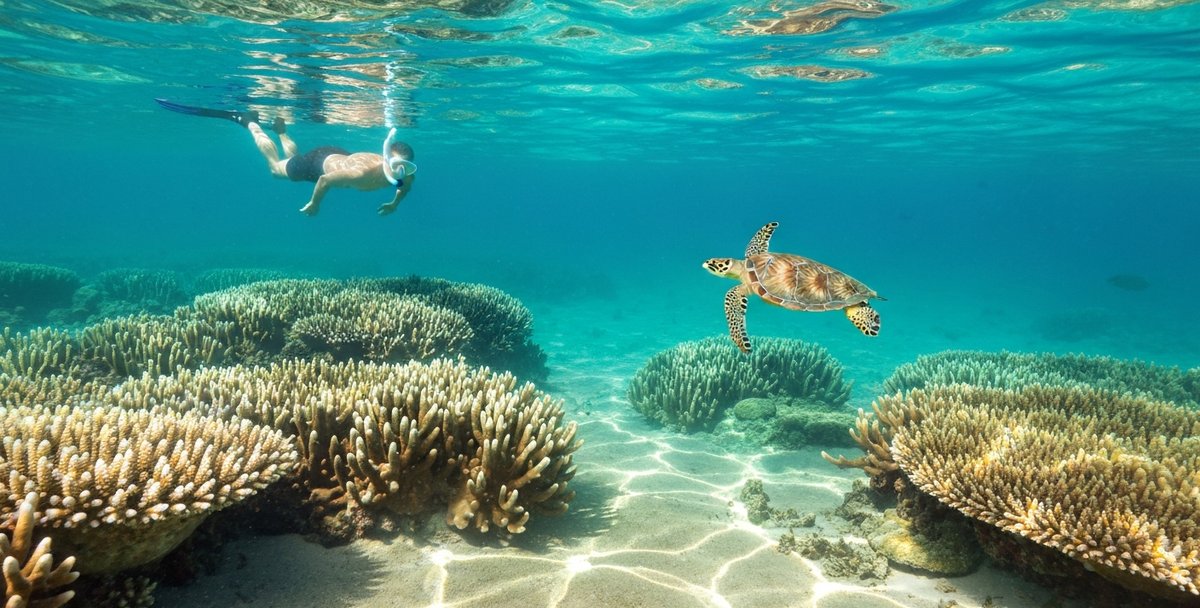
Blue Bay village is about 4 kilometres south of Mahébourg, and its marine park — established in 2000 and covering around 353 hectares — is the most biodiverse coral reef system in Mauritius. On a calm day the water inside the park is the kind of turquoise that looks implausible in photographs and even more vivid in person. Visibility can reach 15 metres or more.
Snorkelling versus Glass-Bottom Boats
You do not need to be a diver or even a strong swimmer to experience Blue Bay properly. The inner lagoon is shallow enough — often 1 to 3 metres over the coral — to snorkel from the beach. Equipment hire is available from several operators on the public beach for Rs 200–400. Glass-bottom boat trips depart throughout the morning from the beach and take about 90 minutes, which is enough to cover the main coral heads where you are likely to see sea turtles, parrotfish, and spotted eagle rays.
The park has a no-anchoring zone over the core reef area, enforced by rangers, which has contributed to a visible recovery of coral coverage over the past decade.
The Public Beach
Blue Bay public beach has free parking, public toilets, and a handful of snack vendors selling grilled corn and iced coconut water. It fills up on Sunday mornings with local families, which is one of the more enjoyable ways to experience how Mauritians actually spend a weekend. During the week it is far quieter.
Pointe d’Esny and the Ile aux Aigrettes Ferry
A kilometre north-east of Blue Bay, Pointe d’Esny is a residential headland with one of the finest natural beaches on the south coast. It is largely backed by private villas, but the beach itself is public and far less visited than Blue Bay. The water is calm, clear, and deeper than at Blue Bay — better for swimming than snorkelling, though you can see plenty along the rocks at either end.
From Pointe d’Esny beach a short ferry (operated by the Mauritian Wildlife Foundation) runs across to Ile aux Aigrettes, a coralline limestone islet that has been painstakingly restored to its pre-human ecological state. You will find giant Aldabra tortoises, endemic pink pigeons, and the last remnants of coastal ebony forest that once covered much of lowland Mauritius. The two-hour guided tours run several times daily and cost around Rs 1,500–2,000 per adult. It is one of the most genuinely educational wildlife experiences in the Indian Ocean region.
Souillac and the Coastal Clifftop Walk
Driving west from Blue Bay along the B9 coastal road takes you through Rochester Falls and into Souillac, roughly 25 kilometres from Mahébourg. The landscape shifts noticeably here — the flat lagoon shoreline gives way to basalt cliffs up to 30 metres high, with waves hitting the rock in a continuous white explosion. It is the most dramatic coastline in Mauritius.
What to See in Souillac
The Telfair Gardens at the edge of town are small but well-kept, with banyan trees and a bust of Charles Telfair, the botanist who managed the nearby sugar estate in the early nineteenth century. Nearby, the Gris Gris cliffs are the most southerly point of Mauritius reachable by road and the only place on the island where you can watch the open Indian Ocean without a reef breaking the swell.
La Vanille Nature Park, about 10 kilometres inland from Souillac near Rivière des Anguilles, is worth a half-day stop, particularly if you are travelling with children. It holds the world’s largest captive collection of Aldabra giant tortoises — over 2,000 animals — alongside crocodiles, fruit bats, insects, and a café that serves crocodile steak (genuinely good, and the animals are farm-raised, not wild-caught).
Rochester Falls, accessible via a cane-field track north of Souillac, drops roughly 10 metres over a wide curtain of basalt columns and is a popular local swimming spot. The track is unpaved and potholed but passable in a standard car with care; allow 20 minutes from the main road.
Le Morne Brabant — UNESCO Peninsula
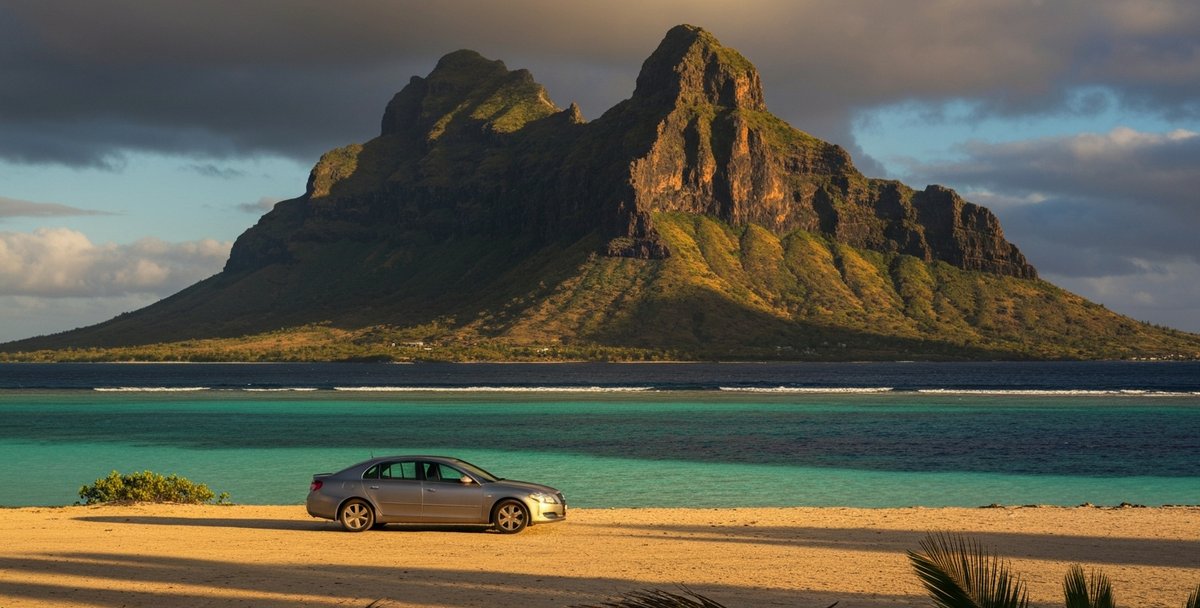
Le Morne is about 30 kilometres west of Souillac and around 65 kilometres from the airport, making it the furthest point on most south-coast itineraries. The basalt peninsula that juts into the lagoon is dominated by Le Morne Brabant mountain (556 metres), a UNESCO World Heritage Site inscribed in 2008 as a symbol of the resistance of enslaved people who sought refuge on its clifftops in the eighteenth and nineteenth centuries.
Hiking Le Morne
The hike to the summit is steep and exposed, best attempted in the cooler months from May to September. Guides are available at the base and are recommended — the trails are not always clearly marked and some sections require scrambling over loose rock. The round trip takes around three to four hours and rewards you with one of the most spectacular panoramas in Mauritius: the Le Morne lagoon on one side, the open sea on the other, and on an exceptionally clear day, Réunion on the horizon.
The beach at Le Morne peninsula is frequently listed among the top ten beaches in the Indian Ocean, and for the kitesurfing conditions in particular it has earned a global reputation. The channel between the reef and the beach produces a consistent wind from June to September that draws professionals for photo shoots and competitions.
Getting to the South Coast from the Airport
SSR International Airport is positioned ideally for the south coast — it sits on the south-eastern plateau about 5 kilometres from the coast road. From the arrivals hall to Blue Bay is roughly 15 minutes by car. To Souillac is about 40 minutes. To Le Morne, allow 60–75 minutes depending on traffic through Mahébourg town.
Organising a transfer in advance is the most reliable option. mauritianrides.com offers fixed-price airport transfers to any south coast destination — you book online, a verified driver meets you in arrivals, and there is no negotiation required at the taxi rank. Prices for a standard car from the airport to Blue Bay typically run in the Rs 700–1,000 range; to Le Morne, expect Rs 1,500–2,000 for a private car.
Buses do serve the south coast from Mahébourg bus station, but routes are infrequent outside peak hours and do not reach many of the beaches or viewpoints directly. For a self-guided tour of several sites in a single day, public buses will cost you more in time than they save in money.
Getting Around the South Coast
Hiring a Driver for the Day
A day tour of the south coast — covering Mahébourg, Blue Bay, Souillac, and Le Morne — is a logical itinerary for visitors staying in other parts of the island. You need your own transport to link these places comfortably, as distances between attractions are not walkable and the coastal road has no cycle lane.
Hiring a private driver through mauritianrides.com for a full-day south coast circuit (roughly 8 hours, 120–150 km) costs in the region of Rs 4,000–6,000 depending on the vehicle size and exact itinerary. This compares favourably with hiring a car if you factor in fuel, insurance, and the time cost of navigating unfamiliar roads.
Self-Drive
If you prefer to self-drive, the coastal B9 road is well-surfaced and easy to follow. Signage to the main attractions is reasonable, though GPS is helpful for smaller sites like Rochester Falls and the Telfair Gardens. Fuel stations are available in Mahébourg and Souillac. Parking at Blue Bay and Le Morne is free and usually available outside July–August school holidays.
Moped Hire
Moped hire is available in Mahébourg and Blue Bay for Rs 600–900 per day. It suits solo travellers who want flexibility on the coastal stretch between the two towns (about 5–6 km of flat road). The road west to Souillac and beyond is manageable by moped but the distances are longer and the coastal road has some fast-moving traffic.
Where to Eat on the South Coast
| Restaurant / Venue | Location | Speciality | Approx. price range |
|---|---|---|---|
| Le Batelage | Mahébourg waterfront | Grilled fish, octopus vindaye | Rs 450–900 per main |
| La Table de Mon Jardin | Souillac | Creole home-cooking, set lunch | Rs 350–600 per person |
| Chez Ram | Blue Bay village | Dholl puri, alouda | Rs 50–150 per dish |
| Coral Reef Restaurant | Blue Bay | Seafood platters | Rs 600–1,200 per main |
| Le Chamarel (day trip) | Chamarel, 20 km north | Rougaille, curry buffet | Rs 700–1,000 per person |
The Monday market in Mahébourg also has several hot-food stalls where you can eat for Rs 100–200 — fish briyani wrapped in a banana leaf, gateau piment (chilli cakes), and fresh roti with curry are the staples worth hunting out.
When to Visit
The south coast is technically accessible year-round, but there are meaningful seasonal differences.
May to September (dry season, cooler): The best months for hiking Le Morne, snorkelling in Blue Bay, and kitesurfing. Temperatures sit around 20–25°C. Sea conditions are calm and visibility in the marine park is at its peak. This is also high tourist season in terms of international arrivals, though the south coast remains less congested than the north.
November to April (warm, wetter): The warm season brings temperatures of 28–34°C and the occasional tropical depression between January and March. Blue Bay beach is busier with local families during Mauritian school holidays in December and January. Rain is typically brief and heavy rather than prolonged. Snorkelling is still good but visibility varies more after heavy rainfall runs off into the lagoon.
Cyclone risk: The official cyclone season runs October to May. Serious cyclones are infrequent — perhaps every three to five years for a direct hit on the south coast — but tropical depressions can bring strong swell and unsettled weather for a few days at a time. Check the Mauritius Meteorological Services site if you are travelling between January and March.
Frequently Asked Questions
Is the south coast good for families with young children?
Yes, particularly Blue Bay and Pointe d’Esny, where the lagoon is calm and shallow. The Ile aux Aigrettes tortoise encounter is a genuine highlight for children, and La Vanille Nature Park near Souillac has dedicated areas for younger visitors. The Mahébourg waterfront is flat and easy for pushchairs. The main caution is sun exposure — the UV index in Mauritius is extremely high even on overcast days, so sun protection is essential.
How far is Blue Bay from the airport?
Blue Bay is approximately 12–15 kilometres from SSR International Airport by road, which works out to around 15–20 minutes in normal traffic. It is one of the closest beach destinations to the airport on the island, which makes it practical as either a first or last stop on a Mauritius itinerary.
Can I visit the south coast as a day trip from Grand Baie or Belle Mare?
Yes, though it makes for a long day. Grand Baie to Le Morne is roughly 90 kilometres and takes around 1.5 to 2 hours each way depending on traffic through Port Louis. From Belle Mare the distance is shorter — around 60–70 kilometres — and the route avoids the capital. A driver who knows the island well makes this considerably easier than self-driving, as you can rest in the car between stops.
What is the best beach on the south coast?
Blue Bay is the most popular and has the best snorkelling. Pointe d’Esny is quieter with equally clear water and better for swimming. The beach at Le Morne peninsula is visually spectacular and famous for kitesurfing, though conditions there can be quite windy in the southern winter months, which is part of its appeal for the sport.
Is it safe to swim at Gris Gris near Souillac?
No — Gris Gris is not a swimming beach. The cliffs are there for the view, and the sea below is exposed, rough, and has no reef protection. There is no safe entry point from the cliffs, and even on apparently calm days the swell is unpredictable. Stick to Blue Bay, Pointe d’Esny, or the Le Morne lagoon beach for swimming.
How do I book a transfer around the south coast?
mauritianrides.com covers the full south coast including airport transfers to Mahébourg, Blue Bay, Souillac, and Le Morne, as well as inter-town trips and full-day driver hire. You can book in advance online, receive a confirmed driver assignment before you travel, and pay at the end of the journey. Drivers are verified locally and know the coastal roads well enough to suggest stops you might not find on a standard tourist map.