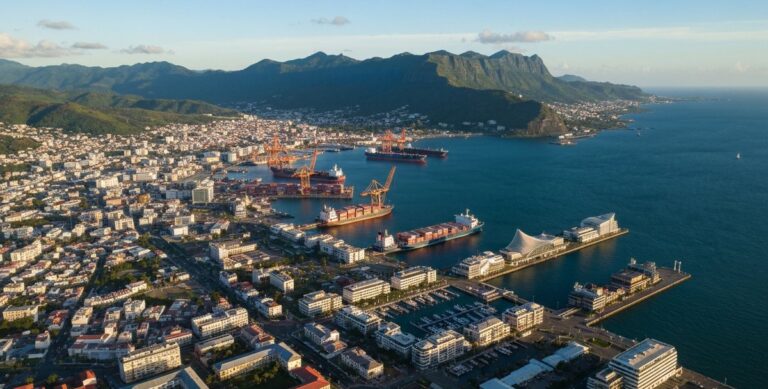
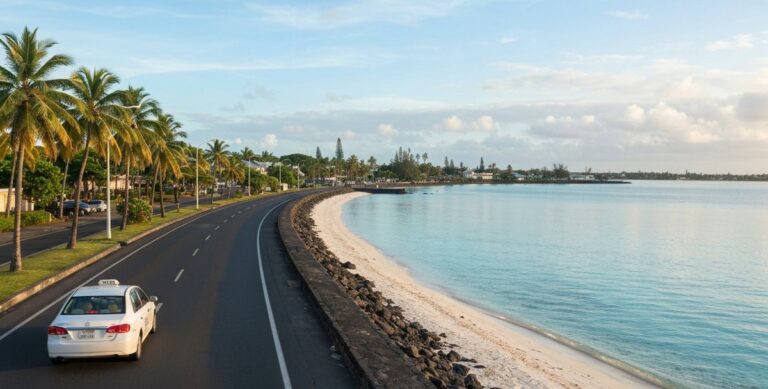
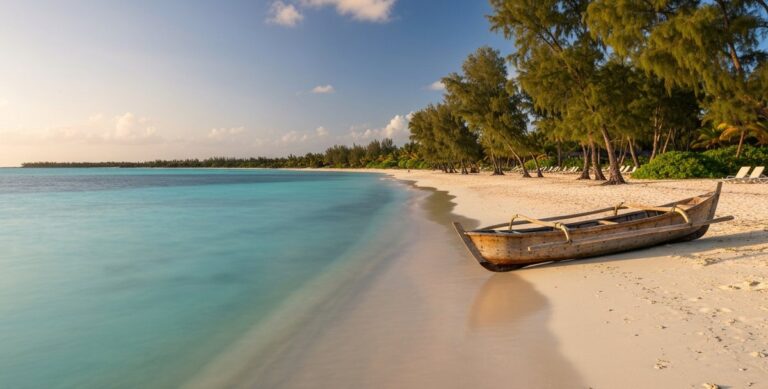
A chamarel mauritius tour covers the island’s most visually distinctive corner: the rippling dunes of Seven Coloured Earth, a waterfall that drops 100 metres into forest, an artisan rum distillery, and a wildlife park — all within a few kilometres of each other in the Black River district. Most visitors combine these in a single half-day from any resort on the island.
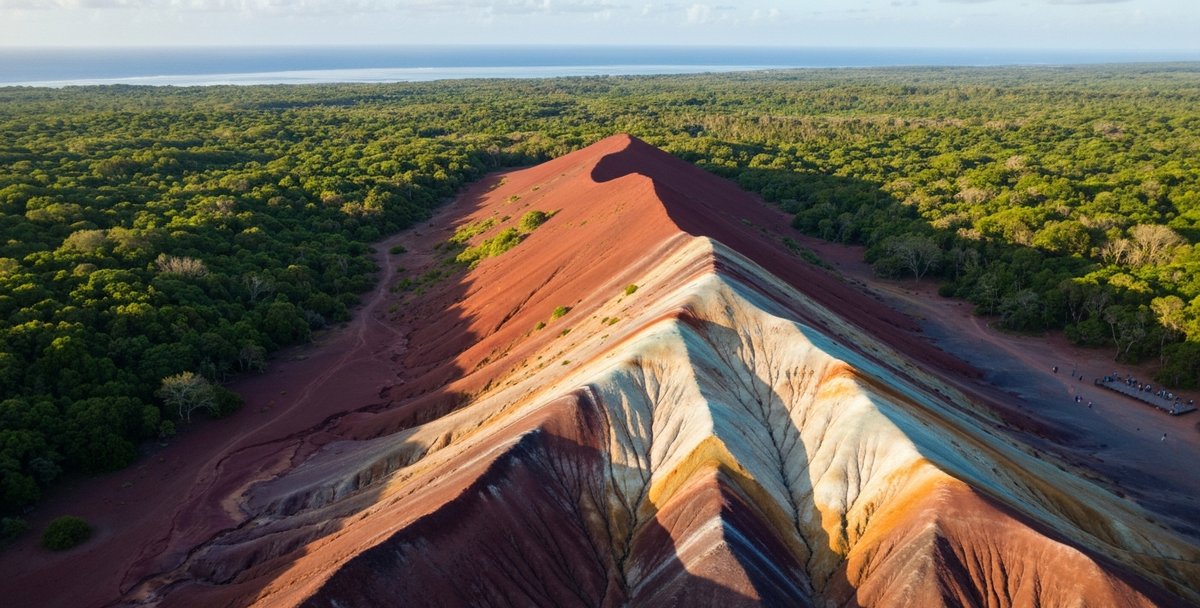
Table of Contents
- Why Chamarel Deserves a Day
- Getting to Chamarel from Major Resorts
- Seven Coloured Earth — What to Expect
- Chamarel Waterfall
- Chamarel Rum Distillery
- Casela and Wildlife Parks Nearby
- Where to Eat in Chamarel
- Best Time to Visit
- Practical Tips and What to Bring
- FAQ
Why Chamarel Deserves a Day
Mauritius is not short of beaches, but Chamarel offers something entirely different — a landscape that looks genuinely alien. The village sits on a plateau in the southwest, roughly 600 metres above sea level, surrounded by the Black River Gorges National Park. On a clear morning you can see across the coastal plain all the way to the lagoon.
The main draw is the Seven Coloured Earth, a geological oddity where volcanic basalt has weathered into iron-rich clays that display at least seven distinct colours — ochre, brick red, violet, deep blue, green, yellow-brown and near-white. The effect is subtle from a photograph but quite striking in person, particularly when light rakes across the surface at an angle. Scientists attribute the colours to the different rates at which lava cooled in different spots, producing varying proportions of minerals including iron and aluminium.
Within two kilometres you have a substantial waterfall, a working rum distillery open to visitors, and a village that serves some of the best grilled fish on the island. That combination — natural spectacle, history, food, a taste of rum — makes Chamarel one of the few inland destinations in Mauritius that earns a full morning or afternoon.
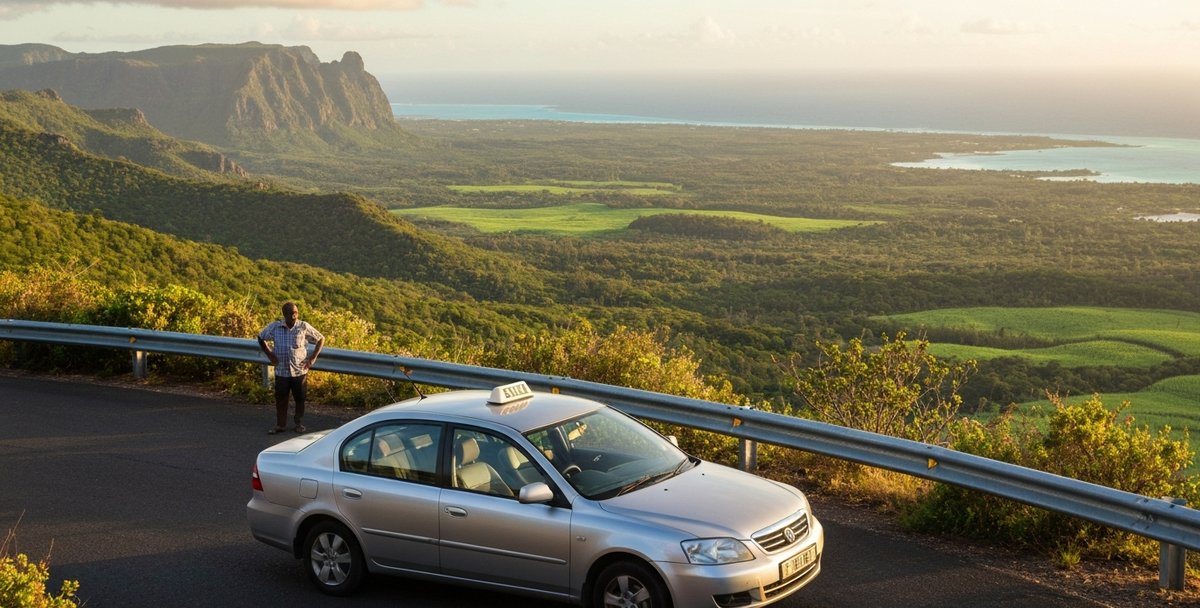
The drive itself is part of the experience. Coming from the coast at Tamarin or Black River, the road climbs sharply through sugarcane fields before entering the canopy of the national park buffer zone. There is no practical public transport to Chamarel. A private transfer or driver is the standard way to arrive.
Getting to Chamarel from Major Resorts
From Grand Baie and the North
The distance from Grand Baie to Chamarel is roughly 80 kilometres via the M1 motorway and then the B104 through Baie du Cap or the inland route through Curepipe. Allow 90 minutes in either direction, more on market mornings when lorries fill the mountain roads. Booking a private driver through mauritianrides.com for a half-day excursion — say, four to five hours including stops — is the most comfortable option. The driver waits at each attraction while you explore.
From Port Louis and Central Plateau
Port Louis sits about 40 kilometres from Chamarel. The A3 to Curepipe and then the B103 through Black River is the clearest route and takes around 50 minutes without traffic. From Rose Hill, Quatre Bornes or Curepipe add roughly 10 minutes each. A shared taxi could get you as far as Rivière Noire, but the final climb to Chamarel has no regular minibus service, so a private hire is effectively required.
From the South and East Coasts
If you are staying near Mahébourg or Blue Bay in the southeast, Chamarel is around 55 kilometres away — closer than the north, but the mountain roads add time. From Belle Mare or Trou d’Eau Douce on the east coast expect closer to 70 kilometres. Either way, the most sensible approach is a door-to-door private driver who can be booked in advance through mauritianrides.com, where you select your pickup point, the number of passengers, and whether you want return transport or a one-way drop.
Distance and Transfer Time Summary
| Departure area | Approx. distance | Typical drive time |
|---|---|---|
| Grand Baie / North | 80 km | 85–100 min |
| Port Louis | 40 km | 50–65 min |
| Flic en Flac | 30 km | 40–55 min |
| Mahébourg / Blue Bay | 55 km | 60–75 min |
| Belle Mare / East | 70 km | 80–95 min |
Flic en Flac on the west coast is the closest beach resort area, which makes it a natural base if Chamarel is a priority for your trip.
Seven Coloured Earth — What to Expect
The Site
The official name of the managed site is Chamarel Seven Coloured Earth Geopark. Entry is charged — around Rs 400–500 per adult at the time of writing, with children under 12 generally half price or free. The site is well maintained, with viewing platforms, clean toilets, a small café and a gift shop. It is relatively compact; most visitors spend 30 to 45 minutes here.
The dunes themselves are fenced off to prevent foot traffic from damaging the surface, which means you view them from raised walkways and platforms. The best viewing angle is from the main upper terrace, where you get the widest panorama of the colour patterns against the forest edge. A second platform lower down gives a closer view but less context.
Photography is best in the morning before haze builds, and on overcast days when harsh shadows do not flatten the colour bands. Midday direct sun washes out the subtler hues.
The Waterfall
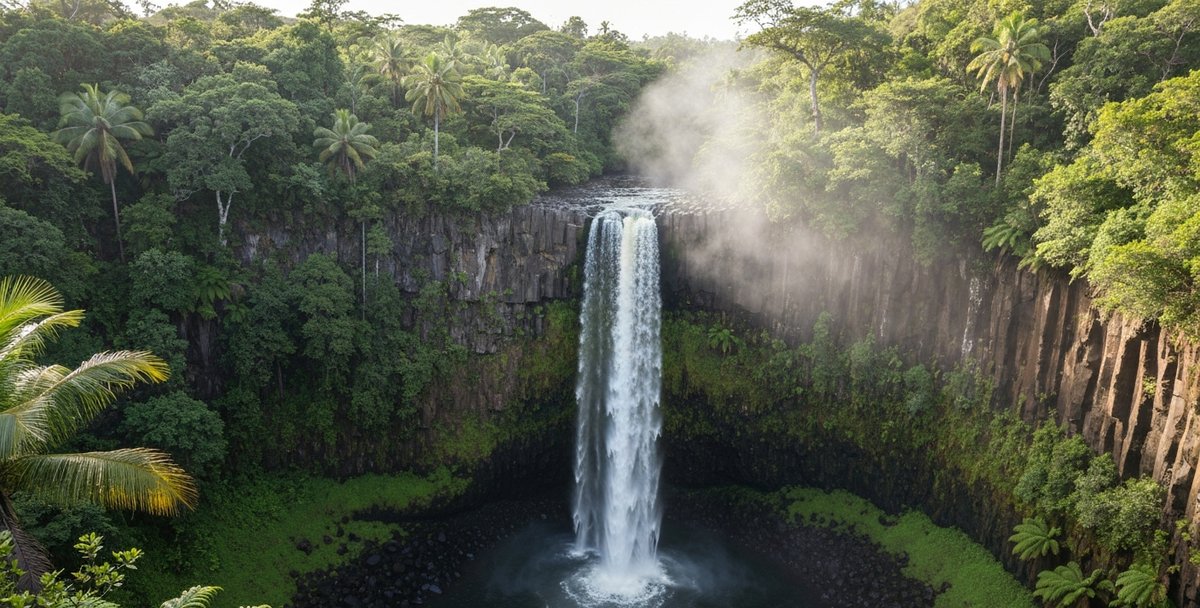
Inside the same ticketed site, a short path leads to a lookout over Chamarel Falls. The falls drop roughly 100 metres in a single cascade into a pool surrounded by dense forest. There is no way to reach the base safely from the park — the gorge is steep and the trails are unofficial at best. The view from the platform is still impressive, particularly after heavy rain when the volume doubles. The falls are at their most dramatic between January and April during the cyclone season rains, though you should always check weather conditions before visiting during that period.
Chamarel Rum Distillery
L’Aventure du Sucre vs Rhumerie de Chamarel
There are two well-known distillery visitor experiences in Mauritius. L’Aventure du Sucre near Pamplemousses in the north focuses on sugar history alongside rum. Rhumerie de Chamarel is the dedicated artisan rum distillery in the village itself, and it is the obvious choice when you are already in the area.
What the Tour Covers
The Rhumerie de Chamarel tour — usually around Rs 500–700 per adult, including tastings — walks you through the full production process: sugarcane pressing, fermentation vats, copper pot stills and barrel ageing rooms. The distillery produces both white rhum agricole (made from fresh sugarcane juice rather than molasses) and aged expressions. The guides are knowledgeable and genuinely enthusiastic; it is not a perfunctory tourist walk-through.
The tasting session at the end includes three or four expressions, typically a blanc, an amber and one of the flavoured rums that use local vanilla, coffee or coconut. These are produced in small batches and are available to buy on site at prices competitive with what you would pay in a Port Louis supermarket.
The distillery also has a terrace restaurant with views across the southern plateau. Even if you skip the full tour, it is worth stopping for a coffee or lunch.
How Long to Allow
Budget 90 minutes minimum for the tour and tasting. If you add lunch on the terrace, two to two and a half hours is realistic.
Casela and Wildlife Parks Nearby
If you are travelling with children or want to extend the day, Casela World of Adventures sits about 25 kilometres from Chamarel near the Flic en Flac coast road. It is a zoo and adventure park with ziplines, quad biking and big cat interactions. It is a full half-day in itself and is better combined with Chamarel on a full-day circuit from the west coast.
Closer to Chamarel, the Black River Gorges National Park offers hiking trails for those who want to explore forest and endemic bird life. The Chamarel viewpoint on the B103 offers a panorama over the Rivière Noire lowlands without requiring any trail walking. The park headquarters at Petrin gives access to longer trails including the route to the Piton de la Rivière Noire, the island’s highest peak at 828 metres.
Where to Eat in Chamarel
Le Chamarel Restaurant
The restaurant at the Seven Coloured Earth site is decent for a quick lunch — creole curries, grilled fish, fresh juice — but is busy in the midday peak when tour groups arrive. Arrive before noon or after 1:30 pm to avoid queuing.
Rhumerie de Chamarel Terrace
Already mentioned above, but worth repeating. The terrace here has some of the best views on the southern plateau and serves proper food — not just rum. The duck confit with rum sauce is a consistent recommendation from regular visitors.
Village Creole Restaurants
The village itself has small family restaurants that are less polished but often more interesting. Grilled marlin with achards (a pickled vegetable condiment) and rice is typical. Prices are low — a full meal rarely exceeds Rs 500 per person. These places are easier to find if you arrive with a local driver who knows where to go; another reason why a private hire through mauritianrides.com adds value beyond just the transport.
Best Time to Visit
By Season
Mauritius has two broad seasons. The summer (November to April) is hot and humid, with occasional heavy rain and cyclone risk. The winter (May to October) is cooler, drier and generally better for touring. For Chamarel specifically, the Seven Coloured Earth is visible year-round, but the colours appear most vivid after a few dry days when the surface is not muddy. The waterfall is most dramatic after rain.
By Time of Day
Arriving early — by 9 am — puts you ahead of the tour bus convoys that arrive from about 10:30 am onwards. By mid-morning the Seven Coloured Earth viewpoints can be crowded and the car park at the geopark fills up. An early start also means cooler temperatures and better light for photography. Plan to leave Chamarel by 1 pm if you want to avoid the worst of the traffic back down the mountain.
Practical Tips and What to Bring
What to Wear
Chamarel sits at altitude and can be noticeably cooler than the coast, sometimes by five or six degrees. A light layer is worth bringing even in summer. The paths at the geopark are paved, but if you plan to walk any forest trails in the national park you will want closed shoes.
Sun Protection
The plateau gets strong UV exposure, particularly in summer. Sunscreen, a hat and sunglasses are standard equipment. The tour paths at the geopark are partly exposed with limited shade.
Cash and Cards
The geopark and distillery accept cards, but the village restaurants are mostly cash only. The nearest ATM is in the town of Chamarel itself or back down the hill towards Black River. Carry Rs 2,000–3,000 per person to cover entry fees, lunch and any purchases at the distillery.
Booking Transport in Advance
Given that there is no practical public bus route to Chamarel, sorting transport before you arrive on the day removes the most stressful variable. Mauritianrides.com lets you pre-book a private driver with a confirmed price, so there is no haggling with street taxis and no waiting around. For a group of four, the cost of a private hire is often comparable to what four people would pay for a shared minibus arrangement, and you set the pace.
Suggested Half-Day Itinerary
| Time | Stop |
|---|---|
| 8:30 am | Depart coast hotel by private driver |
| 9:30 am | Arrive Chamarel Seven Coloured Earth Geopark — 45 min |
| 10:30 am | Rhumerie de Chamarel tour — 90 min |
| 12:00 pm | Lunch on distillery terrace or village restaurant — 60 min |
| 1:30 pm | Optional: Black River Gorges viewpoint — 20 min |
| 2:00 pm | Return transfer to coast |
This runs to around five and a half hours from departure to return, which is the natural duration to request when booking a half-day private hire.
FAQ
How do I get to Chamarel from Grand Baie? Grand Baie is about 80 kilometres from Chamarel, a drive of roughly 85 to 100 minutes depending on traffic. There is no direct bus service. The most practical option is a private driver booked through a local platform like mauritianrides.com. Most drivers offer a half-day package covering Chamarel and return, with waiting time included.
Is the Seven Coloured Earth worth visiting? Yes, though it is better experienced in person than judged from photos. The colour contrast between the different dune bands is genuinely striking, especially in low-angle morning light. The waterfall within the same site adds to the visit. Expect to spend 30 to 45 minutes there; it does not need more time than that.
Can I visit Chamarel on a public bus? Bus services from Port Louis or Quatre Bornes run as far as Rivière Noire on the coast, but the road from there up to Chamarel village has no scheduled public service. Taxis are available in Rivière Noire but can be unreliable in number. For a straightforward visit, a pre-booked private driver is by far the easier option.
How much does a Chamarel tour cost? Entry to the Seven Coloured Earth Geopark is approximately Rs 400–500 per adult. The Rhumerie de Chamarel tour with tasting runs Rs 500–700 per adult. Lunch in the village typically costs Rs 300–500 per person. A private half-day driver from a west coast resort can range from Rs 3,000–5,500 depending on the provider, the distance and the number of stops.
What is rhum agricole and how does Chamarel produce it? Rhum agricole is rum made by fermenting and distilling fresh sugarcane juice rather than molasses, a by-product of sugar refining. Mauritius, like Martinique, produces both styles, but the Rhumerie de Chamarel specialises in agricole production, which preserves more of the grassy, vegetal character of the raw cane. The distillery uses a copper column still and a pot still, and ages some expressions in bourbon casks from the United States.
Is Chamarel suitable for children? Mostly yes. The geopark paths are paved and accessible. The distillery tour is child-friendly up to the tasting portion. Children under about 12 may find the rum tour less engaging than the Earth and waterfall. If you have young children, Casela World of Adventures nearby is worth adding to the day if time allows — it caters directly to families with its animal park and outdoor activities.