Port Louis is the beating heart of Mauritius — a compact, walkable capital that blends French colonial architecture, a buzzing waterfront, and one of the Indian Ocean’s busiest ports. Getting around is straightforward once you understand which areas suit walking, where to catch a taxi, and why a booked private transfer saves time over hunting for transport on the street.
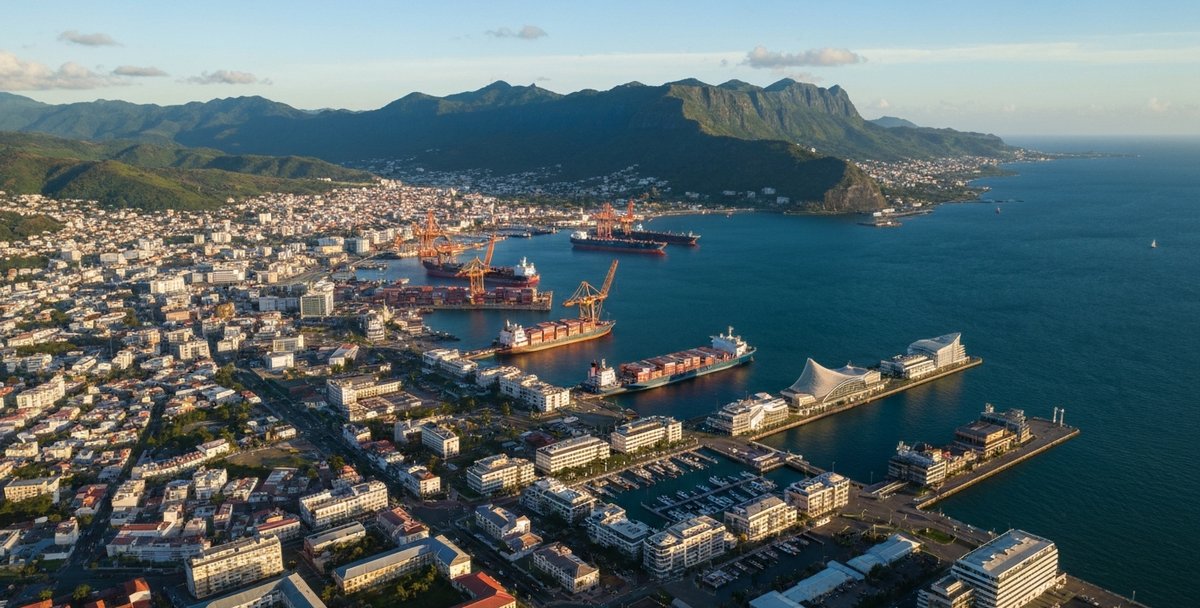
Table of Contents
- Where is Port Louis and how do you reach it?
- Getting to Port Louis from the airport
- Getting around Port Louis on foot
- Taxis in Port Louis — what to expect
- Buses through Port Louis
- Key neighbourhoods and what they’re for
- Top things to do in Port Louis
- Eating and drinking in the capital
- Day trips from Port Louis
- Practical tips before you go
- FAQ
Where is Port Louis and how do you reach it?
Port Louis sits on the north-west coast of Mauritius, cradled between the Moka mountain range and the Indian Ocean. It covers roughly 43 square kilometres, though the area most visitors explore — from the Central Market to the Caudan Waterfront — is far more compact, perhaps 2 to 3 kilometres across. The city is the island’s administrative, commercial, and cultural centre, which means it draws commuters, tourists, and traders every day of the week.
From Sir Seewoosagur Ramgoolam International Airport (SSR), the city is about 48 kilometres away via the M1 motorway. In good traffic the drive takes around 45 to 55 minutes. During the Monday-to-Friday morning rush — roughly 7 am to 9 am — allow a full 90 minutes. The city itself has no rail connection, so you arrive by road regardless of whether you’re coming from the airport, the north coast resorts around Grand Baie, or the south coast villages.
Grand Baie is approximately 20 kilometres north of Port Louis, about 25 to 35 minutes by car outside peak hours. Flic en Flac, on the west coast, is around 25 kilometres away. Mahébourg in the south-east is roughly 55 kilometres and can take over an hour depending on traffic.
Getting to Port Louis from the Airport
Arriving at SSR with bags and jet lag, the last thing you want is to negotiate a price on the pavement. There are broadly three options.
Private taxi booked in advance
Booking a private transfer through a service like mauritianrides.com before you land removes the guesswork entirely. You agree the price upfront, a verified driver is waiting in arrivals, and the vehicle is confirmed. Expect to pay in the region of Rs 1,500 to Rs 2,200 for a standard car transfer from SSR to Port Louis, depending on the time of day and vehicle type. That covers all four of you if you travel as a family — often cheaper per head than the alternatives and far less stressful.
Metered taxis at the airport
The official taxi rank outside arrivals operates on a meter. Fares from SSR to Port Louis typically fall in the Rs 1,400 to Rs 1,800 range, though surcharges apply at night and for extra luggage. Always confirm the driver will use the meter before you get in, or agree a fixed price explicitly.
Airport bus (National Transport Corporation)
The NTC operates routes connecting the airport to Port Louis via the Bus Terminal at Victoria Square. The journey is inexpensive — fares are measured in tens of rupees rather than hundreds — but buses can be crowded, do not carry large luggage easily, and add at least 90 minutes to your journey when you factor in stops. For leisure travellers with cases, it is not the most practical option.
Getting Around Port Louis on Foot
Within the central district, walking is genuinely the best way to move between sights. The Caudan Waterfront, the Blue Penny Museum, Place d’Armes, the Central Market, China Town, and the Immigration Square area are all within a roughly 15-minute walk of each other. The terrain is mostly flat near the waterfront and market; it rises noticeably if you head inland toward Citadelle, where the road climbs steeply.
A few walking notes worth knowing. The pavements in older commercial streets can be uneven, especially around the Central Market area on Farquhar Street. In the wet season (November to April) afternoon downpours are common — a small umbrella in your bag is useful. The city gets crowded on weekday lunchtimes as office workers fill the streets between noon and 2 pm; if you’re visiting the market, going in the morning is considerably more pleasant.
Street harassment of tourists is rare, but pickpocketing in very crowded areas (particularly inside and around the Central Market) is worth being alert to. Keep bags in front of you in those spots.
Taxis in Port Louis — What to Expect
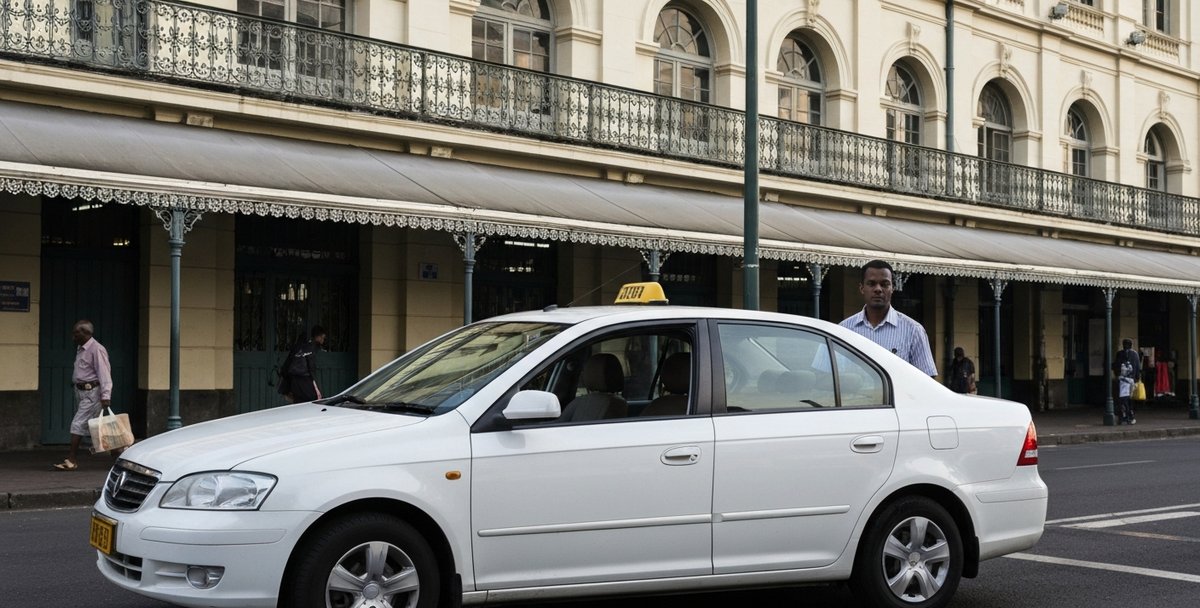
Taxis are plentiful in Port Louis. You’ll find them clustered outside the Caudan Waterfront, near Victoria Square bus station, and around Place d’Armes. Hailing one on the street is usually straightforward during the day.
How fares work
Mauritian taxis are officially metered, though not all drivers use the meter by default. For short journeys within the city centre — say, from the waterfront to the Central Market — fares are typically Rs 150 to Rs 300. For a transfer from Port Louis to Grand Baie you should expect around Rs 900 to Rs 1,500 depending on the vehicle and negotiation. For longer runs like Port Louis to Flic en Flac or Mahébourg, prices range from Rs 1,000 to Rs 2,000.
The practical advice is this: always confirm the fare before you get in. If the driver agrees to use the meter, that’s fine. If they quote a fixed price, that’s also fine — just make sure you’ve agreed it clearly before departure. Drivers who refuse to discuss the fare upfront are worth walking away from.
Booked transfers versus street taxis
For anything beyond a short in-city hop, booking through a platform like mauritianrides.com has real advantages. Prices are confirmed before you travel, the driver knows your pickup point and destination, and there are no misunderstandings about the route. For half-day or full-day hire — which is a common way to see multiple sights around Mauritius in one go — a booked driver who knows the island well is meaningfully better than an impromptu arrangement.
Night-time transport in Port Louis deserves a mention. The city quietens significantly after about 8 pm, and street taxis become less common. If you’re heading out for dinner at the Caudan or attending an evening event, arranging your return transport in advance rather than hoping to find a taxi on the street is the sensible approach.
Buses Through Port Louis
The Victoria Square Bus Terminal in the heart of the city is the main hub for the National Transport Corporation (NTC) and the Road Development Authority (RDA) network. Buses run to most parts of the island, including Grand Baie, Curepipe, Quatre Bornes, and Mahébourg. Fares are very cheap — a journey to Grand Baie, for instance, costs in the region of Rs 40 to Rs 60.
The trade-offs are journey time and comfort. Buses stop frequently, carriages fill up during commuter hours, and they do not run to a tight schedule. They are perfectly usable for budget travel and for solo travellers who have plenty of time. For families, groups with luggage, or anyone with an onward connection to catch, a private transfer is typically the more reliable choice.
Key Neighbourhoods and What They’re For
The Caudan Waterfront
The Caudan is Port Louis’s most polished district — a pedestrianised development on the harbour’s edge that houses restaurants, a casino, the Blue Penny Museum, craft stalls, and the main tourist information office. It’s the most visitor-friendly part of the city, clean, well-lit at night, and easy to navigate. The waterfront itself gives views across the port toward Coin de Mire island on a clear day.
Place d’Armes and the Colonial Quarter
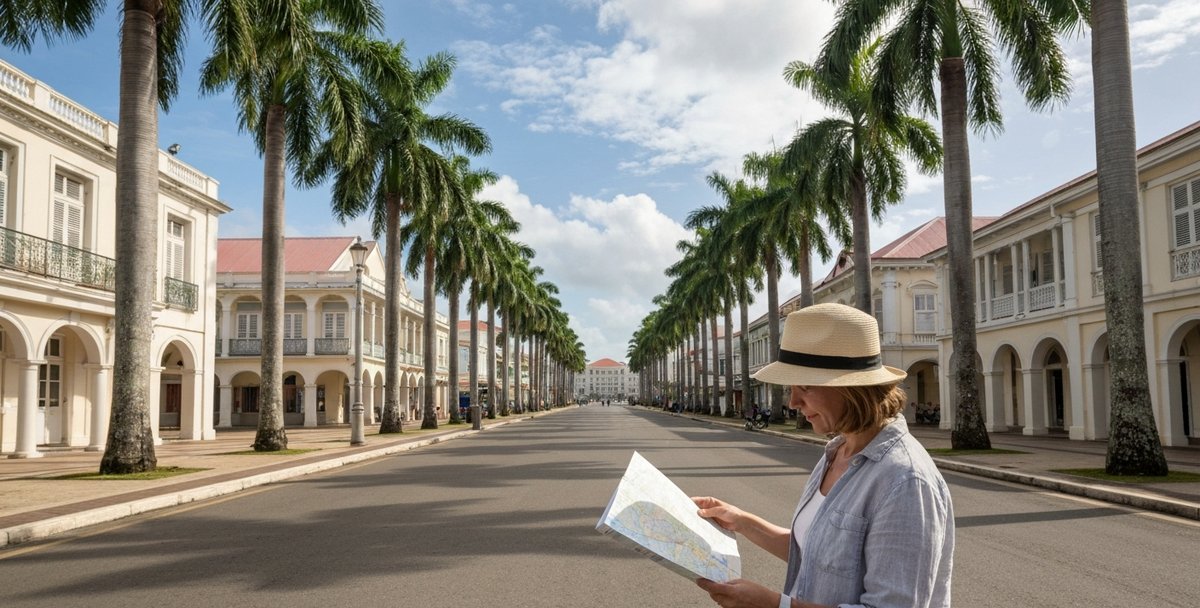
Place d’Armes is the city’s ceremonial spine — a wide boulevard lined with royal palms that runs from the waterfront up to Government House, a French colonial building from 1738 that is still in use. The surrounding streets, particularly around the company gardens, contain some of Port Louis’s best-preserved colonial architecture. It is a short walk from the Caudan and easy to combine with a market visit.
The Central Market (Bazaar)
The Central Market on Farquhar Street is the liveliest part of the city and a genuine working market rather than a tourist facsimile. The food hall occupies one building, the craft and souvenir section another. It opens early — around 6 am — and the freshest produce and most energetic atmosphere are in the morning. By mid-afternoon, many stalls begin closing. This is the place to buy local spices, pickled mangoes, woven baskets, and the kind of street food that doesn’t appear on any restaurant menu.
China Town
A few streets north of the Central Market, Port Louis’s China Town is compact but atmospheric — a handful of blocks along Royal Road and the surrounding streets that have been the commercial centre of the Sino-Mauritian community for generations. The Chinese pagoda on Royal Road is worth a look, and there are several good Chinese and Sino-Mauritian restaurants nearby.
Citadelle (Fort Adelaide)
The Citadelle sits on a hill above the city with panoramic views over Port Louis and the harbour. Built by the British in the 1830s, it is reached by a steep road (or a significant walk uphill from the city centre). The views from the ramparts on a clear day are the best you’ll get of the capital. Taxis can drop you at the entrance; few people walk up from the centre.
Top Things to Do in Port Louis
Blue Penny Museum
Located in the Caudan Waterfront, the Blue Penny Museum holds Mauritius’s most prized philatelic collection, including two of the world’s rarest stamps — the 1847 “Post Office” issues. Beyond stamps, there are exhibits on the island’s colonial history, the history of slavery, and maps and documents from the early settlement era. Admission is a few hundred rupees and the museum takes around 90 minutes to explore properly.
Natural History Museum
On the corner of Chaussée Street and La Chaussée, the Natural History Museum houses the most complete Dodo skeleton in the world, alongside exhibits on Mauritian flora, fauna, and geology. It is small by metropolitan standards but has a very good permanent collection. Entry is free.
Sir Seewoosagur Ramgoolam Botanical Garden (Day Trip)
Strictly speaking this is in Pamplemousses, about 10 kilometres north of Port Louis — easily combined with a city visit. The botanical garden is one of the oldest in the southern hemisphere and contains the giant Victoria amazonica waterlily as well as hundreds of palm species. A taxi from the city centre costs around Rs 400 to Rs 600 one-way.
Port Louis Waterfront Market (Le Caudan Artisans Market)
On weekends, the Caudan waterfront hosts craft and produce markets that draw local designers, food producers, and artisans. If your visit falls on a Saturday or Sunday morning, it is worth allowing extra time here.
Eating and Drinking in the Capital
Port Louis has a genuinely diverse food scene reflecting the island’s mix of cultures — Creole, Indian (both Hindu and Muslim), Chinese, and French culinary traditions all have a real presence.
For street food and market eating: The Central Market food hall is the obvious starting point — dholl puri (flatbread filled with split peas and chutneys), roti, and freshly squeezed sugarcane juice are staples. Mine bouilli (noodle soup) and gateau piment (chilli cakes) are sold from carts around the market perimeter.
For sit-down Creole food: Several small restaurants around China Town and the streets near the market serve very good Creole fish curries and daube. Prices are reasonable — a full lunch with a soft drink runs Rs 250 to Rs 400 at most places.
For a more polished meal: The Caudan Waterfront has a cluster of restaurants with harbour views, ranging from pizza and pasta to sushi and international cuisine. These sit at a higher price point — budget Rs 800 to Rs 1,500 per person for a proper sit-down dinner.
Alcohol is available at most Caudan restaurants and at the casino. The local Phoenix beer and the various rums from Chamarel and Saint Aubin distilleries are worth trying if you haven’t already.
Day Trips from Port Louis
Port Louis works well as a base for day trips, though most visitors stay in the coastal resorts and come to the capital as a day outing rather than the reverse. Either way, the following are worth considering.
Pamplemousses Botanical Garden — 10 km north, 20 minutes by taxi. Rs 400–600 each way.
Citadelle and the hills above Port Louis — within the city, accessible by taxi up the hill road.
Grand Baie — 20 km north, 25–35 minutes, Rs 900–1,500 by private transfer. A full beach resort town with water sports, restaurants, and nightlife.
Chamarel and the Coloured Earths — approximately 65 km south-west, around 90 minutes by road. Best done as a booked day tour with a driver who waits — the site is not served by public transport in any practical sense. mauritianrides.com offers this kind of full-day hire.
Black River Gorges National Park — around 55 km south-west, accessible from the Le Pétrin area. Again, a booked driver makes this significantly easier than attempting it via buses and transfers.
Practical Tips Before You Go
Opening hours. The Central Market, most shops, and public offices operate Monday to Saturday. On Sundays the city is considerably quieter — many shops close and the streets around the market feel almost empty. The Caudan Waterfront stays open seven days a week.
Heat and humidity. Port Louis is one of the hottest parts of Mauritius — it is sheltered by mountains and can feel significantly warmer than coastal resorts. Between November and April, temperatures regularly exceed 33°C with high humidity. Lightweight clothing, sunscreen, and staying hydrated matter more here than anywhere else on the island.
Cash and ATMs. ATMs are widespread in the city centre — there are several on the Caudan waterfront, in Place d’Armes, and near the Central Market. The Mauritian Rupee (MUR) is the currency. Most restaurants and hotels accept cards, but market stalls and street vendors are cash only.
Mobile connectivity. SIM cards from Emtel, Orange, and My.t are cheap and easy to obtain at the airport or in the city. Data is affordable and coverage in Port Louis is excellent.
Language. The working languages of Port Louis are Mauritian Creole, French, and English. English is widely understood — you will have no difficulty communicating in any tourist-facing context.
Security. Port Louis is generally safe during the day. The main risk is petty theft in crowded areas. After dark, the back streets away from the Caudan and main commercial areas are quieter than visitors might expect; stick to well-lit routes or take a taxi for evening journeys.
Booking transport home. This is the one thing visitors consistently underestimate. If you’re arriving at Port Louis for a day from your hotel and your driver isn’t waiting, or you’re trying to get back to a northern resort after dinner, availability of street taxis can be inconsistent. Booking your return through mauritianrides.com before you arrive — or asking your morning driver to return at an agreed time — removes the stress entirely.
FAQ
How long does it take to get from Port Louis to the airport?
From the city centre to SSR Airport by road is roughly 45 to 55 minutes in normal traffic, covering about 48 kilometres via the M1. During weekday mornings between 7 am and 9 am, allow 80 to 90 minutes. A booked taxi or private transfer is the most reliable option — the airport bus is slower and involves a transfer at Victoria Square bus station.
Is it safe to walk around Port Louis as a tourist?
The main tourist areas — the Caudan Waterfront, Place d’Armes, the Central Market, and China Town — are safe to walk during daylight hours. Be aware of your belongings in crowded spots, particularly inside the market building. After dark, stay on well-lit main streets and use a taxi or booked transfer for journeys beyond the immediate waterfront area.
What is the cheapest way to get around Port Louis?
The NTC bus network is the cheapest option by some distance — fares across the city and to nearby towns cost between Rs 25 and Rs 60. For visitors with time and light luggage it is perfectly usable. Walking covers most of the central sights without any cost at all. Taxis are the next tier up for short hops.
Can I book a taxi for a full day to explore Mauritius from Port Louis?
Yes, and this is a very popular way to see the island. A full-day driver typically covers around 8 hours and will take you to multiple sites — Chamarel, Black River Gorges, the south coast, or wherever you plan. Rates for full-day hire vary; expect to pay roughly Rs 4,000 to Rs 6,500 for the day depending on vehicle type and distance. Booking through mauritianrides.com gives you a fixed price and a verified driver rather than an informal arrangement that may change on the day.
Is there parking in Port Louis if I’m driving myself?
There is parking available — the Caudan Waterfront has a large multi-storey car park and there is surface parking near the bus terminal and Central Market. However, central Port Louis has significant traffic congestion during weekday hours, and finding a parking spot mid-morning can take time. For most visitors coming from out of town, a private transfer into the city and back is more practical than driving in and dealing with both parking and the one-way street system.
What should I not miss in Port Louis on a short visit?
If you only have three to four hours, the combination of the Central Market (go before 11 am), a walk along Place d’Armes to Government House, and an hour at the Caudan Waterfront — ideally with time in the Blue Penny Museum — covers the city’s highlights without feeling rushed. The Natural History Museum is five minutes from Place d’Armes and worth adding if you’re interested in natural history. Save the Citadelle for a day when you have more time to enjoy the views.